ภาษาไทยด้านล่าง
Full Report Download / ดาวโหลดรายงานฉบับเต็ม
https://drive.google.com/file/d/1QEsKqMa7EzdMuRFYETgJKjwnF7_DcUa0/view?usp=sharing
“If corruption is not merely about bribery or the exchange of benefits, but about making certain groups of people lose their right to choose and be forced to comply with an unjust system — can we still call it a minor issue?”
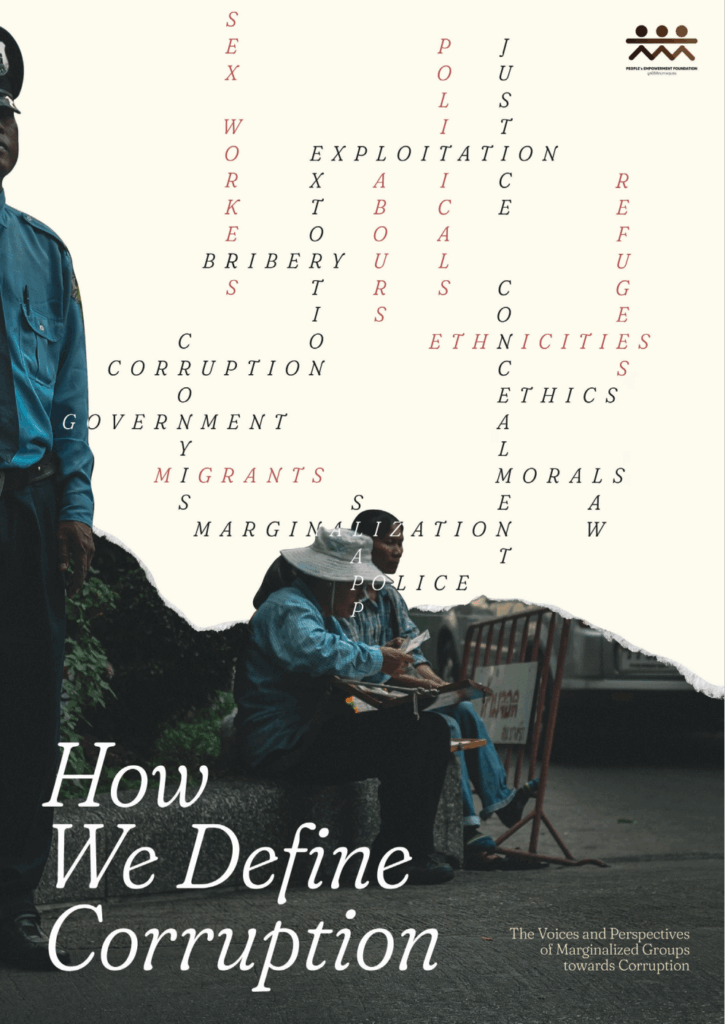
The report How We Define Corruption presents perspectives from civil society and marginalized groups on how they perceive and define “corruption.”
“How does each person define corruption?”
Marginalized people define corruption as “a political and social condition or phenomenon in which state institutions, government officials, or groups with power exploit citizens through their authority and patronage networks — visibly or invisibly, directly or indirectly — through extortion, seeking financial gain, or coercion for sexual benefits.”
Corruption, in this sense, can occur at any time and in any place, perpetuated throughout power relations.
The report amplifies the voices of migrant workers, women, laborers, service workers, young political activists, refugees, and others whose voices are often overlooked. Their experiences demonstrate that corruption is a structural issue that directly impacts human rights, rather than merely a matter of politicians’ bribery or minor misconduct.
This report’s analysis of corruption aligns with the lived experiences and definitions provided by marginalized communities themselves.
Key Findings
Finding One: Corruption is defined by marginalized experiences.
Each marginalized group defines corruption based on every experience that faces self-defined corruption. The definition varies depending on specific factors and elements, which can include state instruments, laws, discrimination, stigmatization, and other social factors. Many groups define corruption in various ways, such as fraud against laws (some groups being marginalized by laws), extortion for bribes, unfair practices, sextortion, direct and indirect forms of exploitation, impunity, and freedom from wrongdoing, where people with state power take benefits from those with less power; SLAPPs make people afraid to engage with political motivations, delays in justice, and the processes that render individuals unknowledgeable within the context of fear.
Finding Two: Corruption towards marginalized groups is systematic.
It is found that corruption takes forms that are systematic, patterned, persistent, and normalized. It involves more than one key actor across multiple agents for its completion. Systematic also refers to corrupt actors and agents who have potentially manipulated the margins of benefits and can be able to set the degree of bribery cost. They can further control circumstances, enhanced by laws, to force and intimidate the marginalized into relying on corruption created by superior corrupt agents.
Finding Three: Corruption is undetectable and unimpeachable.
Undetectable is the functioning of brokers and agents, which facilitates corrupt practices so as not to leave any evidence behind. It allows state and authorized officials to be free from any illegal fraud and wrongdoing. The marginalized groups realize that corruption exists but cannot access evidence. Marginalized groups cannot even sue or accuse perpetrators according to the legal process. While unimpeachable, corrupt agents are protected by laws, allowing them to operate corrupt acts with power gained by the states. From this perspective, it refers to the capacity for the concealment of corrupt acts whose power can control entire circumstances.
Finding Four: Under unequal relationships, obstacles and dysfunction of laws, Corruption is non-negotiable and unavoidable.
The marginalized conditions have become a key factor in creating asymmetrical power relations between superior and inferior. This bribery system under this system is not based on both sides negotiating benefits, but these are extortion forms in which one side will take benefits while the other side (marginalized groups) must rely upon it to obtain fundamental rights and reduce other presumably harmful risks to be livable. In this sense, marginalized groups cannot even negotiate or avoid. If they resist or deny it, it would consequently negatively impact their life.
Finding Five: Contrasting Perspectives between the Marginalized Groups and the National Anti-Corruption Agency within Norms of Bureaucracy.
Despite Thailand has various institutions, such as the Thai National Anti-Corruption Commission (NACC), and other bureaucratic mechanisms to prevent and respond to corruption practices, the marginalized groups see it as not helpful and relevant to corruption based on their definitions. Some marginalized groups feel re-victimized when engaging with these anti-corruption institutions and mechanisms. The best practice that they consider when dealing with corrupt acts is to make it done at the first stage whenever corrupt acts begin. Lengthy negotiations would make things worse than anyone can expect. Moreover, the state loses trust in anti-corruption agencies and all state institutions, such as the legislative, executive, and jurisdiction.
From their perspective, the best way to combat corruption is to address it immediately when it occurs, rather than allowing it to persist. This lack of trust extends to all state institutions — legislative, executive, and judicial. Marginalized people believe that the existing system cannot deliver justice or resolve corruption affecting their lives.
Discussion
This study further suggests that corruption systems are difficult to categorize simply as “grand corruption” or “petty corruption.” The key mechanism of concealment hides facts, preventing proper analysis. However, when sufficient evidence indicates the involvement of high-level officials and large sums of money, such systems should be classified as grand corruption — explaining why concealment and impunity are central to maintaining it.
The study also highlights the intersection between marginalization and corruption, showing how systemic corruption leads to widespread human rights violations. Marginalized conditions become an essential component of systemic corruption, allowing exploitation and coercion to infiltrate various aspects of social life. Marginalized people are forced to comply with such systems merely to secure fundamental rights, which become “bargaining factors” in an unjust power structure.
This perspective explains why conditions of marginalization persist — because some power holders exploitatively benefit from inequality, lack of access to justice, and deprivation of fundamental rights.
Recommendations
Recommendation One: Addressing marginalized conditions will contribute to systematically reducing corruption.
Recommendation Two: Changing social norms, rather than solely monitoring corruption, to enhance the Corruption Perceptions Index (CPI).
Recommendation Three: New social innovations should be established specifically to address and resolve marginalization in the corruption system.
เปิดตัวรายงาน “How We Define Corruption” “พวกเราให้นิยามคอร์รัปชั่นอย่างไร” (รายงานภาษาอังกฤษ)
“หากการคอร์รัปชั่น ไม่ได้เป็นเค่เรื่องแลกเปลี่ยนผลประโยชน์หรือส่วย แต่คือการทำให้คนบางกลุ่ม ‘ไม่มีสิทธิเลือก’ และต้องจำยอมกับระบบที่ไม่เป็นธรรม การคอร์รัปชั่นยังเป็นเรื่องเล็กอีกหรือไม่?”
รายงาน How We Define Corruption รายงานเปิดมุมมองของกลุ่มภาคประชาชนและกลุ่มเปราะบางที่มองและการให้นิยามความหมายของคำว่า “คอร์รัปชั่น”
“ทุกคนให้ความหมายของคอร์รัปชั่นว่าอย่างไร?”
ประชาชนกลุ่มเปราะบางได้ให้คำนิยามการคอร์รัปชั่นว่า “สภาพการณ์และปรากฏการณ์ทางการเมืองและสังคม ที่หน่วยงานรัฐ ข้าราชการ หรือกลุ่มผู้มีอำนาจใช้อำนาจและเครือข่ายพวกพ้องเอาเปรียบประชาชน ทั้งมองเห็นและมองไม่เห็น โดยตรงและโดยอ้อม ไม่ว่าจะเป็นการรีดไถ แสวงหาผลประโยชน์ทางการเงิน รวมถึงการบังคับเพื่อผลประโยชน์ทางเพศ” ที่การคอร์รัปชั่นสามารถเกิดขึ้นได้ทุกเมื่อ ทุกเวลา ผ่านการกดทับผ่านสัมพันธ์เชิงอำนาจและความไม่เท่าเทียมกันในสังคม
รายงานเล่าผ่านเสียงของแรงงานข้ามชาติ ผู้หญิง แรงงาน พนักงานบริการ เยาวชนนักกิจกรรมทางการเมือง ผู้ลี้ภัย แรงงานและอีกหลายกลุ่มที่เสียงของพวกเขาไม่ถูกให้ความสำคัญ บ่งชี้ให้เห็นว่าคอร์รัปชันคือปัญหาเชิงโครงสร้าง ทั้งส่งผลและมีปฏิสัมพันธ์โดยตรงกับสิทธิมนุษยชน ไม่ใช่เพียงเรื่องเล็กๆหรือการจ่ายสินบนของนักการเมืองและผู้มีอำนาจ
การอธิบายปรากฎการณ์คอร์รัปชั่นที่อยู่ในรายงานนี้ ตั้งอยู่บนพื้นฐานของการให้คำนิยามของประชาชนกลุ่มเปราะบาง
ข้อค้นพบที่สำคัญของรายงาน
“การคอร์รัปชั่นถูกตีความหมายผ่านชีวิตประจำวัน” การคอร์รัปชั่นถูกให้ความหมายผ่านชีวิตประจำวันของคนหลายกลุ่ม ซึ่งมีบริบทและปัจจัยที่แตกต่างกัน เช่นปัญหาการละเมิดกฎหมาย (เช่นกฎหมายที่กีดกันคนบางกลุ่ม) การรีดไถ่เอาเปรียบ ภาวะลอยพ้นผิดของเจ้าหน้าที่รัฐ การใช้กฎหมายปิดปาก SLAPP และทำให้ผู้คนกลัวที่จะมีส่วนร่วมทางการเมือง ความล่าช้าในกระบวนยุติธรรมรวมถึงการทำให้ประชาชนขาดความรู้และอยู่ในบริบทของความกลัว ทุกอย่างล้วนเป็นส่วนหนึ่งของการคอร์รัปชั่น
“การคอร์รัปชั่นนั้นมีรูปแบบที่เป็นระบบและมีการควบคุมสภาพการณ์” การคอร์รัปชันที่กระทำต่อกลุ่มเปราะบางมีลักษณะเป็น “ระบบ” โดยมีรูปแบบที่เห็นได้ชัดเจน ต่อเนื่อง และถูกทำให้กลายเป็นเรื่องปกติ การคอร์รัปชันประเภทนี้มักเกี่ยวข้องกับหลายฝ่ายร่วมมือกัน ไม่ใช่เพียงผู้กระทำคนเดียว อีกทั้งผู้กระทำและเครือข่ายยังสามารถปรับเปลี่ยนหรือควบคุม “ผลประโยชน์” ได้ เช่น การกำหนดระดับของค่าติดสินบน และอาศัยกฎหมายหรือเงื่อนไขต่าง ๆ เพื่อบีบบังคับและข่มขู่ให้กลุ่มชายขอบต้องพึ่งพาการคอร์รัปชันที่ถูกสร้างขึ้นโดยผู้มีอำนาจเหนือกว่า
“การคอร์รัปชั่นที่ไม่สามารถเข้าถึงหลักฐานหรือเอาผิดได้”
ไม่สามารถเข้าถึงหลักฐานได้ (Undetectable): ผู้กระทำงานคอร์รัปชั่นสามารถดำเนินการโดยไม่ทิ้งหลักฐานหรือควบคุมสภาพการณ์ไว้ได้ ทำให้เจ้าหน้าที่หลายคนพ้นผิดจากการกระทำที่ผิดกฎหมายได้ กลุ่มเปราะบางแม้จะรู้ว่าการคอร์รัปชั่นมีอยู่จริง แต่จะไม่สามารถเข้าถึงหลักฐานที่เอาผิดและฟ้องร้องผู้กระทำได้
เอาผิดไม่ได้ (Unimpeachable): ผู้ทำการคอร์รัปชั่นในบางกรณีได้รับความคุ้มครองโดยกฎหมาย จึงสามารถใช้ตำแหน่งและอำนาจรัฐดำเนินการทุจริตได้อย่างต่อเนื่อง ทั้งสองความหมายนี้ชี้ให้เห็นถึงศักยภาพในการปกปิดการกระทำทุจริต (concealment) ที่สามารถควบคุมสถานการณ์และเงื่อนไขของสภาพการณ์ทั้งหมดได้
“การคอร์รัปชั่นนั้นเป็นสิ่งที่ต่อรองและหลีกเลี่ยงไม่ได้ ”
ภายใต้ความสัมพันธ์ที่ไม่เท่าเทียม อุปสรรค และความบกพร่องของกฎหมาย การเกิดสถานภาพเปราะบางทางสถานะสังคม ทำให้เกิดความสัมพันธ์เชิงอำนาจที่ไม่สมดุล ระหว่างผู้มีอำนาจเหนือกว่าและผู้ด้อยกว่า การจ่ายสินบนภายใต้สถานภาพนี้ ไม่ใช่การเจรจาผลประโยชน์ที่สองฝ่ายเต็มใจ แต่เป็นการรีดไถ่ ขูดรีด เอาเปรียบ ซึ่งผู้ที่มีอำนาจเหนือกว่าจะได้ประโยชน์เพียงฝ่ายเดียว กลุ่มประชาชนเปราะบางจำเป็นต้องยอมเพื่อเข้าถึงสิทธิขั้นพื้นฐานในการใช้ชีวิตและลดความเสี่ยงจากผลกระทบต่อการดำรงชีวิต กลุ่มเปราะบางไม่ปฏิเสธได้ในท้ายที่สุด หากปฏิเสธหรือต่อต้านจะส่งผลกระทบทางลบต่อการใช้ชีวิตที่อาจคาดการณ์ได้ยาก
“ทัศนคติและมุมมองด้านคอร์รัปชั่นที่แตกต่างกันระหว่างรัฐและประชาชน”
มุมมองที่แตกต่างกันระหว่างกลุ่มเปราะบางกับหน่วยงานต่อต้านการทุจริตภายใต้วิถีระบบราชการ
แม้ประเทศไทยจะมีหลายสถาบัน เช่น คณะกรรมการป้องกันและปราบปรามการทุจริตแห่งชาติ (ป.ป.ช.) และกลไกทางราชการอื่น ๆ เพื่อป้องกันและรับมือกับการทุจริต แต่สำหรับกลุ่มเปราะบาง การมีหน่วยงานเหล่านี้ไม่ได้ช่วยแก้ปัญหาการคอร์รัปชันตามสิ่งที่พวกเขาเผชิญ บางกลุ่มรู้สึกเหมือนถูกทำให้ไม่มีความสำคัญเมื่อเข้าไปมีปฏิสัมพันธ์กับสถาบันและกลไกเหล่านี้ แนวทางที่กลุ่มชายขอบเห็นว่าดีที่สุดในการจัดการกับการคอร์รัปชัน คือการแก้ไขตั้งแต่เริ่มแรกทันทีที่การทุจริตเกิดขึ้น เพราะหากปล่อยให้ยืดเยื้อจะยิ่งทำให้สถานการณ์แย่ลง นอกจากนี้ ความไม่ไว้วางใจนี้ยังขยายไปถึงหน่วยงานต่อต้านคอร์รัปชัน และกลไกของรัฐทั้งหมด ไม่ว่าจะเป็นฝ่ายนิติบัญญัติ บริหาร หรือแม้กระทั่งฝ่ายตุลาการ พวกเขาไม่เชื่อว่ากลไกรัฐที่มีอยู่จะช่วยแก้ปัญหาหรือสร้างความยุติธรรมให้ประชาชนกลุ่มเปราะบางได้
ข้อถกเถียงในรายงาน
งานศึกษานี้ชี้ให้เห็นว่าควรมีการพิจารณาอย่างรอบคอบว่าระบบการคอร์รัปชันนี้ยากที่จะถูกจัดให้อยู่ในลักษณะ “การทุจริตขนาดใหญ่” (grand corruption) หรือ “การทุจริตขนาดเล็ก” (petty corruption) โดยพบว่าหน้าที่สำคัญของการปกปิด (concealment) คือการซ่อนข้อเท็จจริง ทำให้ไม่สามารถวิเคราะห์ได้อย่างถูกต้อง อย่างไรก็ตาม หากมีหลักฐานเพียงพอที่บ่งชี้ว่ามีเจ้าหน้าที่ระดับสูงและเงินจำนวนมากเกี่ยวข้อง ระบบนี้ควรถูกจัดเป็น “การทุจริตขนาดใหญ่” ซึ่งอธิบายได้ว่าทำไมการปกปิดหลักฐานและการกระทำผิดจึงเป็นกลไกสำคัญในการซ่อนร่องรอยการทุจริต
นอกจากนี้ งานศึกษายังชี้ให้เห็นถึง จุดตัดระหว่างสภาพความเปราะบางและการคอร์รัปชัน ส่งผลต่อการละเมิดสิทธิมนุษยชนในวงกว้าง ความเปราะบางกลายเป็นองค์ประกอบสำคัญของการคอร์รัปชันเชิงระบบ ที่เปิดโอกาสให้ผู้ทุจริตเข้ามาแทรกแซงชีวิตในหลายมิติทางสังคม ผ่านการเอารัดเอาเปรียบและการรีดไถ กลุ่มเปราะบางจำเป็นต้องยอมจำนนต่อระบบดังกล่าวเพียงเพื่อให้ได้มาซึ่งสิทธิขั้นพื้นฐาน ซึ่งถูกทำให้กลายเป็น “ปัจจัยต่อรอง” ในระบบการเอารัดเอาเปรียบที่ไม่เป็นธรรมนี้ ในมุมมองนี้จึงอธิบายได้ว่าทำไมเงื่อนไขของสถานภาพความเปราะบางจึงดำรงอยู่ต่อเนื่องและไม่เคยได้รับการแก้ไข เพราะมีผู้มีอำนาจบางกลุ่มได้ประโยชน์จากการคงอยู่ของความเหลื่อมล้ำ การไม่ได้รับสิทธิขั้นพื้นฐานและความยุติธรรม ล้วนเกี่ยวเนื่องกับคอร์รัปชันที่เป็นระบบ
ข้อเสนอแนะ
แก้ไขปัญหาความเปราะบางและส่งเสริมสิทธิมนุษยชน เป็นการช่วยลดปัจจัยการเกิดคอร์รัปชันอย่างเป็นระบบ
ต้องเปลี่ยนบรรทัดฐานทางสังคม ไม่ใช่แค่การตรวจจับคอร์รัปชั่น แต่ต้องทำสังคมมีความเชื่อว่าสิ่งเหล่านี้ถูกแก้ไขอย่างจริงจัง จะส่งผลและเป็นการยกระดับดัชนีการรับรู้การคอร์รัปชัน (CPI)
สร้างนวัตกรรมทางสังคมใหม่ๆเพื่อส่งเสริมความยุติธรรม การแก้ไขความเปราะบางจำเป็นต้องมีนวัตกรรมใหม่ที่เข้าใจและสามารถแก้ไขปัญหาความเปราะบางที่มีความเฉพาะในแต่ละประเด็นได้ นโยบายรัฐแบบเหมารวมไม่สามารถแก้ไขกลุ่มเปราะบางทั้งหมดได้ นวัตกรรมที่ดีต้องอยู่บนพื้นฐานการรับฟังและมีส่วนร่วมจากกลุ่มประชากรเปราะบางเพื่อแก้ไขปัญหาได้อย่างเข้าใจแก่นของปัญหา
In-Depth Interviews about Corruption Perspectives of Each Group / บทสัมภาษณ์กับมุมมองคอร์รัปชั่นของแต่ละกลุ่ม
บทความสัมภาษณ์ภาษาไทย
1. [พนักงงานบริการ] บทความ ผู้ให้บริการทางเพศ “การต่อสู้เพื่อทำให้งานบริการทางเพศไม่เป็นอาชญากรรม การทุจริตอย่างเป็นระบบกับงานบริการทางเพศ”
2. [ผู้หญิงแรงงานข้ามชาติ] บทความ แรงงานหญิงข้ามชาติ: “สภาวะไร้อำนาจ สถานไร้รัฐ และการถูกเอารัดเอาเปรียบภายใต้การโยกย้ายถิ่นฐานกับการทุจริจที่ไม่เป็นธรรมในไทย”
3. [เยาวชนนักกิจกรรม] บทความ เยาวชนนักกิจกรรมทางการเมือง: “จากความเงียบงันสู่การประท้วง: เรื่องราวของนักกิจกรรมหนุ่มสาวที่ต่อสู้กับการทุจริต”
4. [แรงงาน] บทความ แรงงาน: “ความต่างชั้นของดุลอำนาจ: การต่อสู้ของแรงงานไทยซึ่งคัดค้านอำนาจรัฐและการทุจริตเชิงระบบ”
6. [ชาติพันธ์ุ] บทความชนเผ่าพื้นเมืองและชาติพันธุ์: “การฉ้อโกงอย่างเป็นระบบที่ไม่เคยมีการนิยามต่อชาวมอร์แกน มอร์แกลน และอุรัคลาโวย ในภาคใต้ของประเทศไทย”
English Article
1. [Sex Workers] Article Sex Workers “Fight to Decriminalization Sex Worker in Thailand and Systemic Corruption”
2. [Women Migrant Workers] Article Migrant Workers “Powerless, Stateless and Exploited under a Corrupted Migration System in Thailand”
3. [Young Activist] Article: “Youth Political Activists: From Silence to Protest: The Story of Youth Activists Tackling Corruption”
5. [Refugees] Article: Refugees: “Bribes to Live: The Myanmar Heros who Became Refugees in Thailand: A Story of Activism, Defiance, Courage, and, Above All, The Resilience to Confront the Corruption that Transcends The Myanmar-Thai Border”
6. [Ethnicities] Article Indigenous and Ethnicity: “The Never-Defined Systemic Corruption toward the Indigenous Morgan, Morglan, and Uraklawoi People of Southern Thailand”